Julianna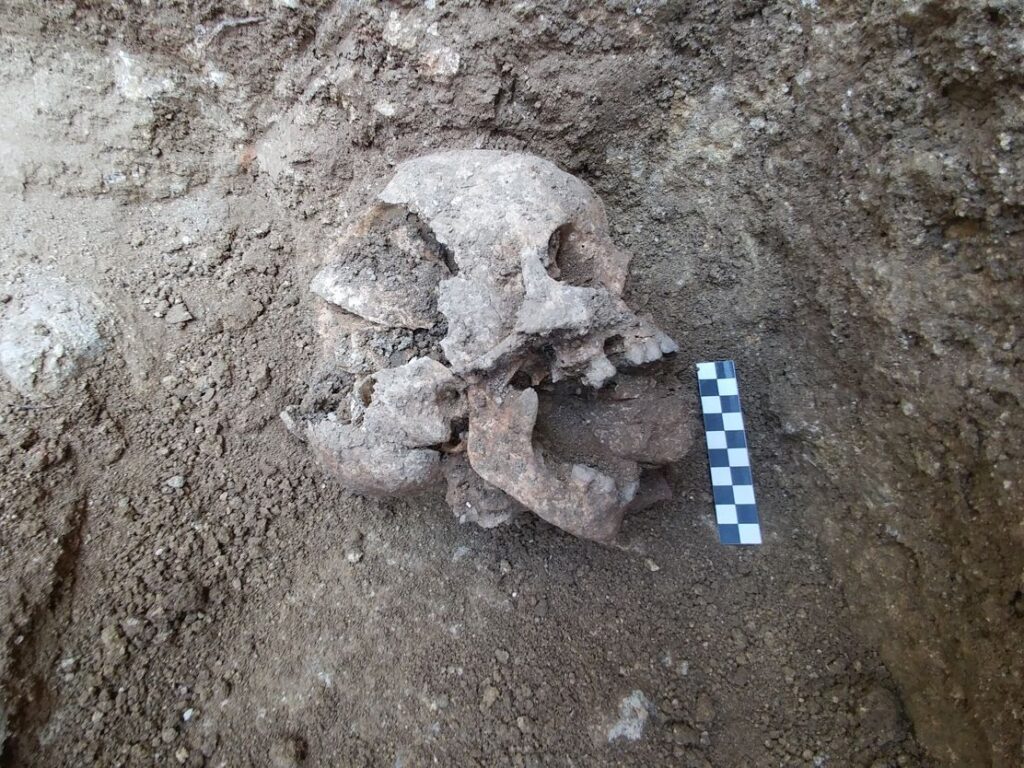
People didn’t speak about the boy after he was buried. They didn’t want to. To do so might encourage whatever darkness they’d experienced to come back, and that was the last thing they needed. He was buried, gone and silenced. Or so they thought.
They weren’t to know in their small minds and experience that his grave would open again.
For days after, the house had felt strange, wrong. The shadows in the corners seemed to breathe and dance at odd speeds, sometimes slow, sometimes fast.
Some said they heard a soft tapping late at night, like young bones knocking stubbornly under the floorboards. Strange noises, odd smells. Dogs snarled at empty doorways. People jumped at odd noises.
A hen walked backwards suddenly, then dropped dead. By then, the village had already begun to tremble. So they did what sane people did: they kept their eyes on the child’s bedroom window. In case he popped up again.
Then The Realisation: Vampires
It did not take long for the whispers to begin. The fear-filled gossip and prayers.
The illness was not normal. It wasn’t like other illnesses. The children, they said, went stiff before they died. Their eyes rolled back like demon-possessed people’s eyes do. They gurgled, snarled, sweated, and cried out.
The world had tilted. It looked different now; darkness had become a real thing, not a tale. The word started to float. It left people’s lips and floated across the meadows, fields and across darkened water. The word was Vampire.
Not the mystical creature of Hollywood, but an animalistic creature who wanted to devour and drink.
The Stone The Burial
After the burial, no parent slept. Mothers hung herbs above doorways. Men sat with oil lamps until sunrise, staring at the cemetery as if guarding it. Even the elders who had lived long enough to have seen things and experienced enough to understand them began to admit that this was not normal or natural.
Something was wrong, very wrong.
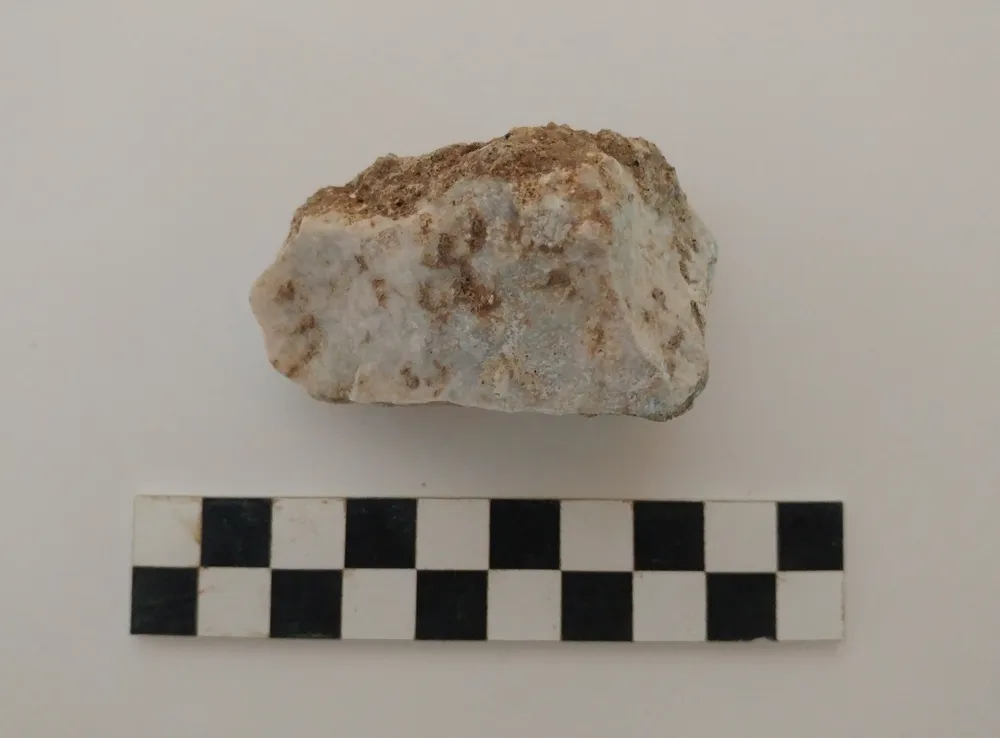
The boy’s burial became a matter of survival. They carried him out under a sky that felt too silent and prepared him in a way that was pure ritual. A stone was forced into his mouth with a terrible finality.
They grimaced as it clanked against his teeth, and air left his body with a grunt. Startled, they stood back. Was it still breathing? They wedged it further in to ensure that whatever it was trying to escape could not.
The villagers threw clumps of soil over his body and left. But his face and the stone never left their minds.
His small body looked tortured.
Eventually, the talking stopped, only mentioned now and then, about the vampire boy. Then people died, as they do, and new people were born, and soon he was forgotten. Almost.
But all darkness eventually comes to light. Centuries later, the pit was opened again.
There was nothing dramatic when the grave first appeared. Just a patch of soil that gave way too quickly, revealing a thin curve of bone beneath it. Once the dirt was brushed aside, the grave told its story of what had happened.
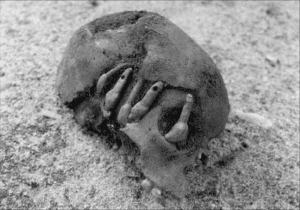
A small skull lay in a cradle made of roof tiles. The jaw had been pulled unnaturally wide. A stone filled the mouth, wedged there, brutal but not final.
One look was enough to unsettle even those archaeologists who had seen dozens of infant burials. The violence was not careless. It had purpose.
The Findings: Who Was the Vampire Child?
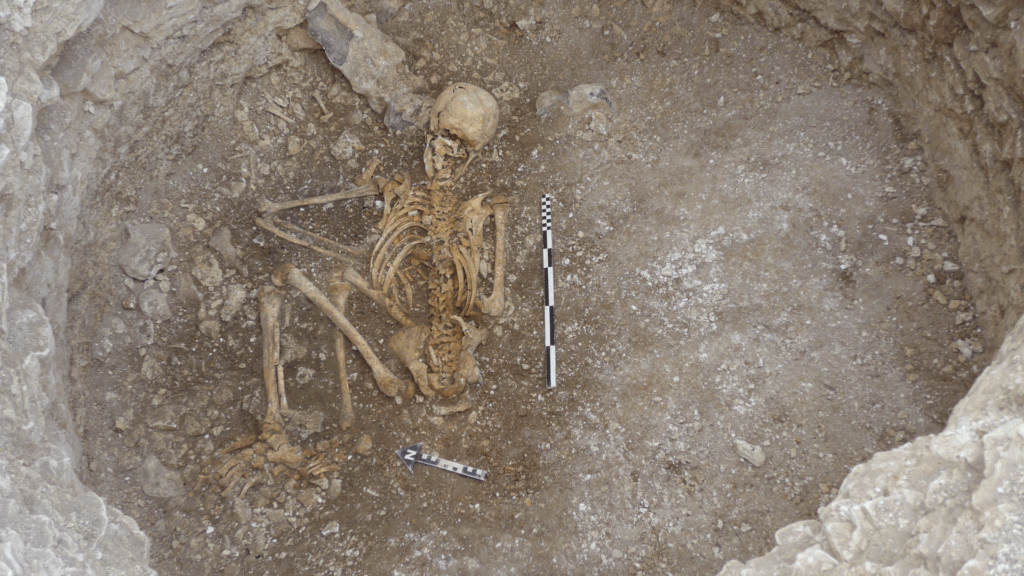
The remains belonged to a child around ten years old. The age was determined by the teeth, which had been forced tightly around the stone. The skeleton was otherwise typical for the region and period.
Nothing that unusual.
It was the mouth that transformed the grave into something far from ordinary. Stone-in-the-mouth burials are rare. The mouth was believed to be a doorway. Block it, and the doorway closed. Archaeologists knew this.
As more graves were uncovered at the infant cemetery, it became clear that this was not an isolated death. Many children had been buried there within a short span of time. Some had amulets near their hands. Some were covered with makeshift offerings. They were the kinds of objects families create when they are desperate and have nothing else left to give.
It was a cemetery built during a crisis. Something had cut through the young with astonishing speed.
That pattern was the clue. Bone samples, soil readings, and the distribution of the graves all pointed to one thing. Malaria.
The disease leaves faint traces on children who survive long enough to develop specific lesions. Several skeletons showed them. Once the parasite was identified as the most likely culprit, the entire picture shifted.
The village had not been cursed. It had been sick. Terribly sick.
So why the stone?
Why force it into the boy’s mouth with such force? Even if the villagers knew the child had died of a disease, the act carried meaning.
In Roman folk belief, illness was often linked to breath and air. People thought bad air or evil spirits passed from mouth to mouth. If a child died in a delirious or violent state, his final breath was considered dangerous.
The stone could have been placed there to stop that corrupted breath escaping. It was fear, not cruelty.
The grave of the Lugnano child sits at the crossroads between science and superstition.
It shows how people try to control what they cannot understand. The villagers were terrified, and their terror hardened into ritual. The archaeologists uncovering the site were not frightened, but the moment they saw the stone, they recognised exactly what the villagers had been thinking.
A vampire burial. Not the elegant creature of later folklore but something far more primal. A restless dead who might disturb the living.
The truth was sadder. The boy did not rise. He did not walk. He did not feed. He died of malaria during a devastating outbreak. The stone in his mouth was their attempt to protect themselves from an invisible world of breath and illness. Perhaps he died with people staring at him in fear. Unsure of what to do next. That weird fear still hangs around now if you let yourself feel it.
Check Out Our Substack For More
Our Substack gives you added insights into our thoughts and the different stories we tell. Dive deeper into some True Ancient Horror.