Barry
Barry 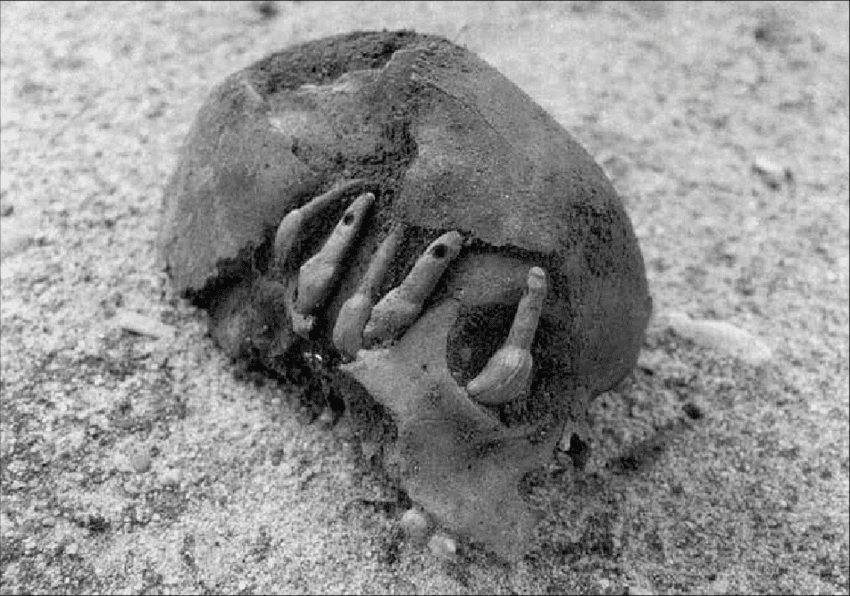
About 50 miles north of Berlin lies a rocky hilltop called Weinberg Hill. Today, it offers visitors amazing views of the surrounding landscape, but 8000 years ago, things were different. This is Gross Fredenwalde, Germany’s oldest cemetery, and it contains a puzzling and bizarre burial.
A Cemetery That Shouldn’t Exist
What makes this site so extraordinary is that the people who used it were not settled farmers. This cemetery instead belongs to hunter-gatherers who would constantly move across the landscape to follow game and to unearth seasonal resources. But something stood out to them at Gross Fredenwalde: between 6,400BC and 4,900BC, these hunter-gatherers would return to this site on a windswept hilltop for one reason. To bury their dead.
This is highly unusual, and archaeologists love this site for that very reason. This was not some random burial. It was a planned cemetery at a time when we weren’t even sure that planned cemeteries would be a thing. For a mobile community, this is practically unheard of.
We once thought hunter-gatherers buried their dead near their camps, but those camps were temporary, making discoveries difficult. Yet this site reveals that something different happened thousands of years ago. They had a deep bond with this place, returning to it even as their camps shifted.
The site was first discovered by accident in 1962 when construction workers were installing a signpost. Since research resumed in 2012, archaeologists have identified at least 12 individuals in eight or more graves, with five of them children under six years old. And there are likely more burials waiting to be discovered.
The Baby Who Waited 8,400 Years
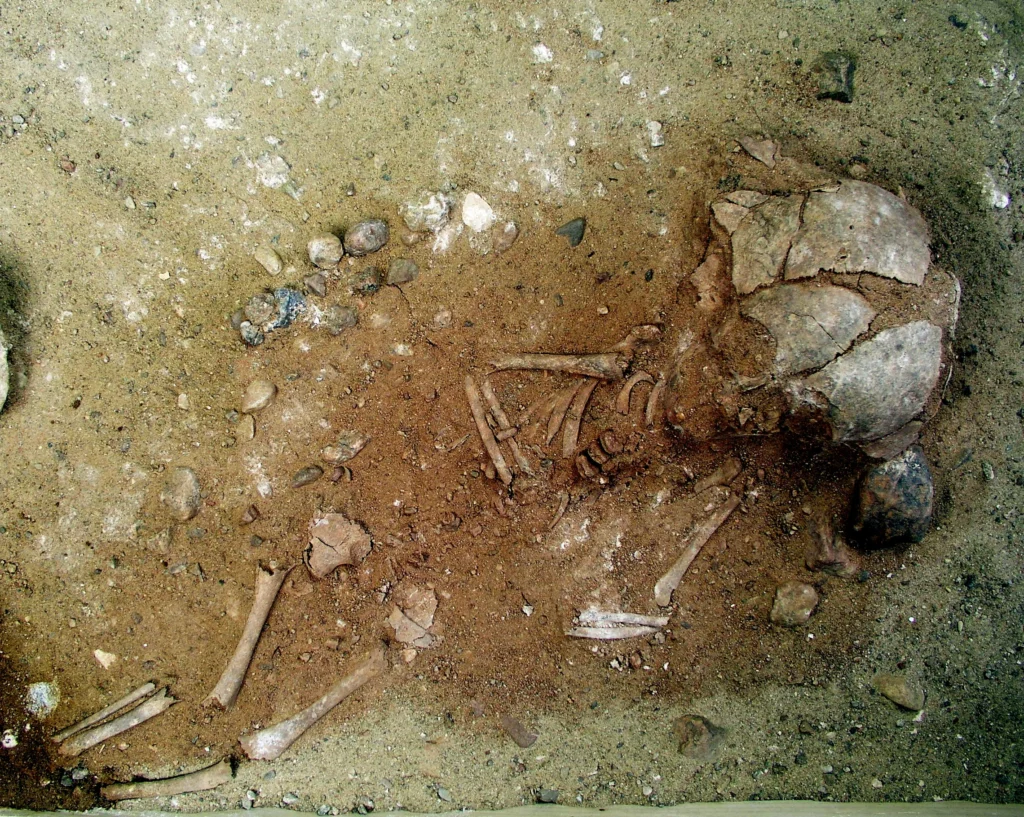
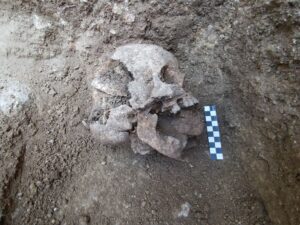
In 2014, archaeologists made an extraordinary discovery: the body of a six-month-old infant who was buried around 6,400BC. You may think the discovery of the body of a child is not that unusual, but you’d be wrong.
Infant skeletons from this period will almost never survive. Their bones are tiny and fragile and will decompose rapidly in almost any type of soil. Yet that didn’t happen here. The skeleton survived in order to tell its story.
The excavation team knew how delicate this operation was, so they removed a single 660-pound block of earth from the site to excavate it in a laboratory. What they discovered was heartbreaking.
As the soil was removed, they noticed the baby’s arms were folded across its chest; the bones and soil were stained red with ochre pigment. This careful preparation and use of ochre were meaningful acts, signifying that the burial was filled with care and ritual, not simply disposal. The inclusion of ceremonial elements shows the significance the community placed on honouring the deceased, particularly the youngest among them.
The Man Who Stands Forever
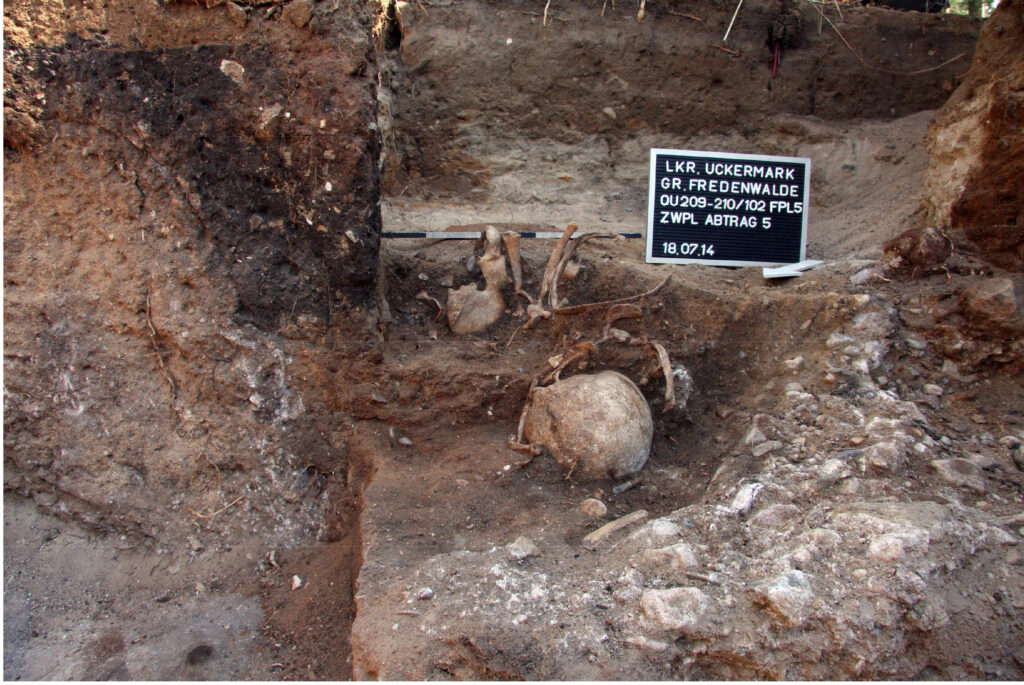
If the idea of the burial of an infant makes you feel sad, the other major discovery at the site will leave you feeling more unsettled.
Around 4,900 BC, a man became the last human to be buried in the cemetery. In his mid-twenties, his burial is unique in Central and Northern Europe. Actually, the closest burials similar to his are in Russia, hundreds of miles away.
So, what’s different about this burial? The man was buried upright, an unusual and significant choice that likely carried powerful symbolic meaning—perhaps to set him apart, to mark a unique status, or as part of a complex funerary tradition.
Thousands of years ago, these Mesolithic people dug a deep pit, placed the man in it, and, if that sounds bizarre, you only know part of the story so far.
When they buried the man, they only did so up to his knees. The rest of his body was left exposed to the elements. His body would have been sticking out on this hilltop for the weather to do its job and help him decompose. Animals also came to feast on his body. Eventually, his bones collapsed, but the ritual surrounding him was not over.
It’s known that after this, the pit was completely filled. They then lit a fire on top of his grave as one final ritual. Was it to mark his grave? Was it a purification ritual? Were they hoping to do something for him in their concept of the afterlife?
We also know from his skeleton that he did not do much hard labour. He may instead have been a skilled craftsman who made stone tools. Although he was certainly buried with bone tools and flint blades, these items alone do not explain the elaborate, multi-stage burial he received. It remains unclear what set him apart, prompting the special treatment at his burial.
We will never know the answer to that question.
What Does It All Mean?
Gross Fredenwalde makes us rethink our beliefs surrounding the Mesolithic in Europe. They may have seemed primitive compared to our society, but they led complex lives. They were not stupid or less intelligent than we are today. They had social structures, deep spiritual beliefs, and heavy emotions. You can see this when you think about them painting the baby’s body with red ochre. Their burial rituals were very specific, so they must have had meaning.
The cemetery sheds light on the concepts of territory and identity in the Mesolithic. There’s no village nearby, so they had to decide this hilltop was important enough to be claimed as their tomb. It was a marker in the landscape to let others know they existed.
Gross Fredenwalde gives us the opportunity to look into the mind of our ancestors 8,000 years ago. We see people who loved, suffered grief, and sought to discover some kind of meaning in death. It’s no different from what we do today.
Their cemetery survived, but without headstones or elaborate monuments. Instead, it survived via the bones of a six-month-old child with their arms folded and painted with red ochre. It survived with the remains of a young man who stood in his grave for months before crumbling and being buried, and a fire was placed on top of him.
In laboratories today, archaeologists carefully study these remains—DNA samples, isotope analyses, bone chemistry—trying to piece together the lives of people who have been dead for 8,000 years. But perhaps what matters most is simply this: on a rocky hilltop in northeastern Germany, long before the first pyramids were built, before Stonehenge, before written language, people gathered to honour their dead. They created rituals. They remembered.
And now, thanks to archaeology, we remember them too.
Join Our Substack to Learn More
People being buried upright is rare. Only a handful of other burials of this type have ever been discovered. Join us on our Substack to uncover more about this strange Stone Age practice.