Barry
Barry 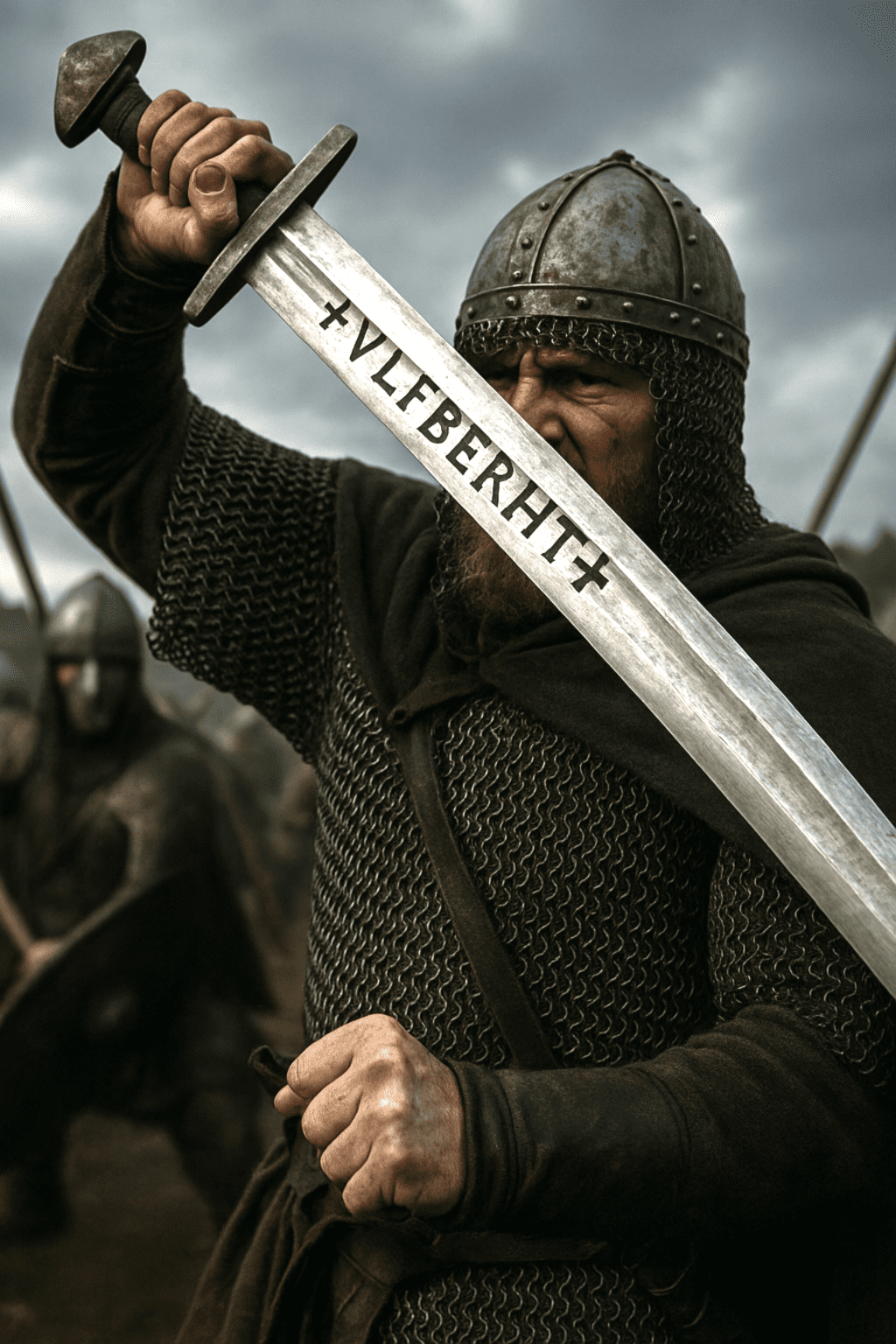
Content note: This article includes vivid descriptions of historical violence intended to convey psychological and historical reality. Reader discretion is advised.
Before
You weren’t supposed to question it.
That’s what you need to understand first.
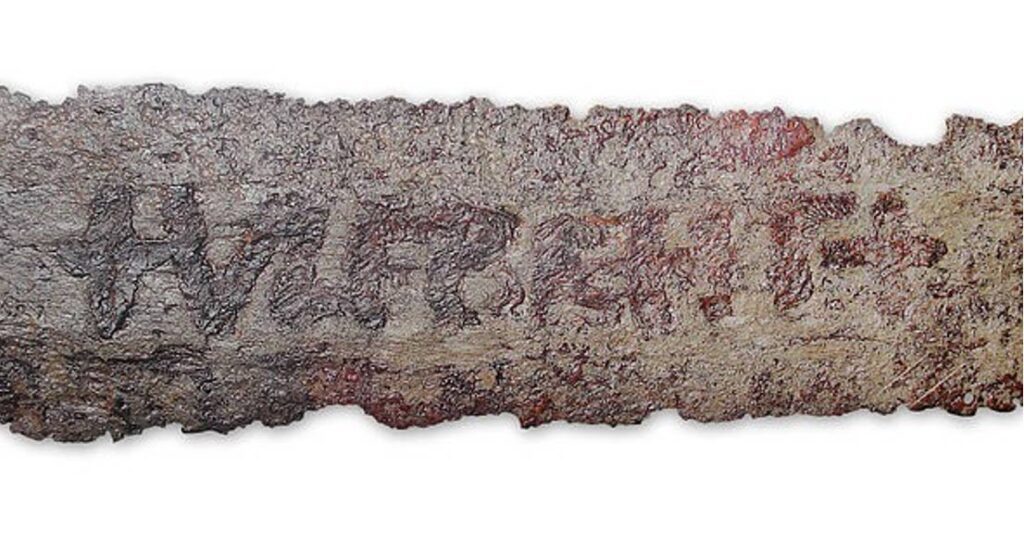
When the merchant laid the sword across the table three months ago, and you saw that inscription etched into the steel – +VLFBERH+T – you didn’t ask questions.
Why would you?
It was the finest sword ever made. It meant you were safe. This inscription signified a mark of unparalleled quality and prestige.
It meant authority, safety and trust. It was a symbol of strength, courage and survival. Everything a Viking was meant to be. That was you.
You paid three years of silver for your Ulfberht sword. Your wife cried. Worried that your children will inherit debt instead of land.
But that is the point.
You’ll survive the battle. That’s what the inscription means. That’s the promise, the Ulfberht sword is more than a weapon; it’s the embodiment of hope, the belief that you will win, your family will flourish. All will be well.
Now
The Weight of Certainty
The sword is in your hand now. Just over a kilogram, 1.5 kilograms, to be exact. Perfectly balanced steel, the leather grip moulded to your palm. You’ve been holding it for an hour, waiting for the signal, and your arm should be screaming. But the balance is so perfect you barely feel the weight.
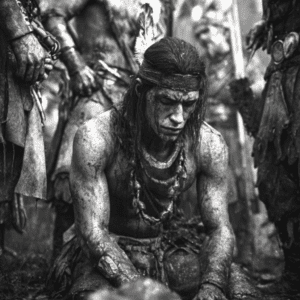
Around you, the shield wall breathes. Wood creaks. Mail chinks. You can smell the man beside you – unwashed wool, rancid, the sour tang of fear.
You probably smell the same.
You wield a Ulfberht. The world’s premier sword. Steel forged at searing temperatures—over 1,650 degrees—transforming iron into something near-miraculous. High-carbon crucible steel, likely from lands you cannot name. Steel that journeyed thousands of miles along the Volga.
Your neighbour’s sword is made of soft iron, which will bend and notch. Yours can shear through helmets. Slice mail like linen.
You’re going into battle believing you will survive.
That belief makes you more dangerous than ten men with lesser blades.
The Signal
The horn sounds.
The enemy line is moving. Close enough now that you can see individual faces. A boy, maybe sixteen, looks terrified. An older man with a grey beard looks calm. You don’t want to think about who they are. You can’t.
Your fingers tighten on the grip. The Ulfberht sword feels like an extension of your arm. It should. It’s your life, your means, your guarantee for survival. You’ve practised this ten thousand times. You know exactly how it will respond when steel meets steel – that solid, resonant impact, the way your blade will hold whilst theirs shatters.
You’ve staked everything on this certainty. Your life. Your children’s future. Three years of silver that could have bought land, livestock, and security.
But none of that matters if you’re dead.
The shield walls are running now. Closing the gap. You can hear individual footfalls, individual breaths. The sound builds into a roar.
The Impact
The lines collide.
It’s not noble. It’s chaos. Wood splinters. Someone screams. You feel something hot splash across your neck – blood, you don’t know whose. A tooth hits your cheek, still warm.
An axe appears from nowhere, arcing towards your skull. You don’t think. You’ve trained for this. Your body knows what to do.
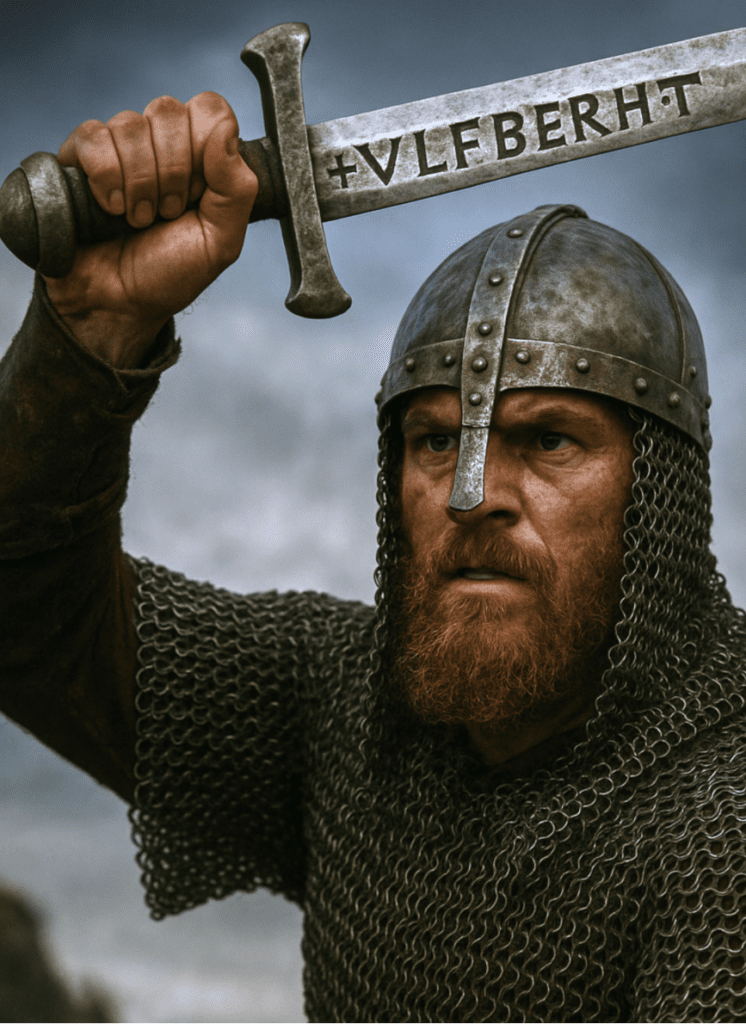
You raise your Ulfberht sword.
The axe connects.
The Sound
You hear something you’ve never heard before.
A snap. High-pitched. Brittle. Wrong.
The blade doesn’t bend. It doesn’t hold.
It shatters.
The sword explodes into jagged fragments. Something hot slashes across your cheekbone. Your own blade, slicing into your face. Your hand is still gripping the hilt, but there’s nothing attached to it anymore.
Just empty air where your survival used to be.
The enemy’s axe is still coming.
The Understanding
You have perhaps half a second.
Half a second to understand that the steel wasn’t high-carbon crucible from distant forges. It was cheap local iron, riddled with impurities called slag. Brittle. Weak.
Half a second to realise the inscription was a lie. That some forger you never met took your three years of silver and handed you death wrapped in false promises. Maybe he even misspelt it – +VLFBERHT+T instead of +VLFBERH+T – because he couldn’t read what he was copying.
The sword was a fake.
You’d been duped. Cheated. Swindled.
Half a second to know you weren’t killed by your enemy’s superior skill.
Instead, you were murdered by a man who’s probably sleeping soundly in a workshop hundreds of miles away, who valued silver more than your life, who knew you’d never return to complain because you’d be dead and rotting somewhere he didn’t even know where. He didn’t care.
You were dead the moment you bought this sword. The battle just revealed what was always true.
The Collapse
Your brain does something strange in that frozen moment. Psychologists would call it dissociation, but you don’t have words for it. The world slows. Becomes unreal.
All the aggression, all the will to fight, everything that made you dangerous evaporates. Just like that. Not because you’re a coward. Because the fundamental belief that kept you standing, the absolute trust your weapon would hold, has catastrophically collapsed.
You’re not a warrior anymore.
You’re just a man holding evidence of his own stupidity, watching death arrive whilst his children’s inheritance vanishes into debt.
The worst part? You know that richer men with genuine steel will step over your body and survive. Your death proves nothing except that you couldn’t afford the real thing.
The axe connects.
What You Couldn’t Know About the Ulfberht Sword
Later
You couldn’t have known that counterfeits flooded the trade routes for decades. That warriors just like you died clutching shattered blades, their final thoughts the same mixture of disbelief and rage.
You couldn’t have known that even the genuine Ulfberht sword was vanishing. That by the early 11th century, the real ones simply stopped appearing in graves, in hoards, in archaeological records.
The knowledge of how to forge them was being erased. Not gradually. Catastrophically.
Archaeologists watched this truth much later from afar. Centuries away.
Maybe the trade routes that brought the precious steel collapsed. Maybe they were severed by wars fought in lands you’d never heard of. Maybe the master forgers, the few who truly understood the secrets of high-temperature metallurgy, died without passing on their knowledge.
Maybe they looked at what their creation had spawned, these counterfeits killing men who trusted them and decided to call a halt altogether. Only you didn’t know.
You couldn’t have known that, even if you’d saved for ten years instead of three, even if you’d sold everything you owned. By the time you went looking for a genuine Ulfberht, there might not have been any left to buy. The swords didn’t exist anymore.
The Truth in the Mud
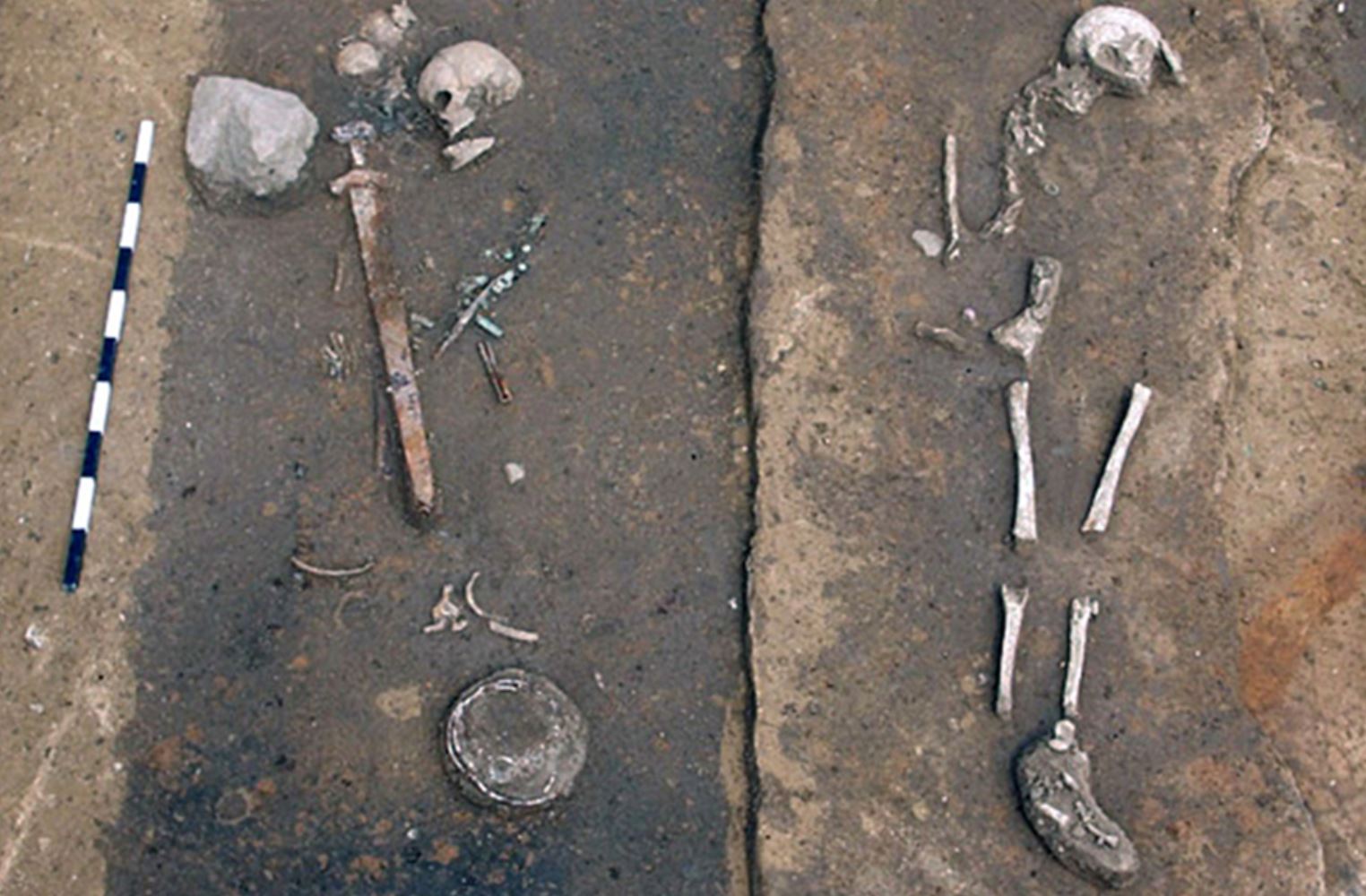
Your body will lie in foreign soil. The shattered blade will scatter in the mud beside you. Your wife will receive word months from now, if she’s lucky. Your children will grow up knowing their father died in battle, which sounds honourable.
They won’t know the truth.
That you died trusting a lie etched in worthless steel. That someone murdered you for profit. That the greatest weapons ever forged in the Viking world were disappearing, taking their secrets to the grave. Leaving men like you with nothing but counterfeits and broken promises.
The Ulfberht sword became a legend of loss.
And you became bones in the ground, hand clenched around the lie that killed you.
Archaeological Note: The Ulfberht Sword
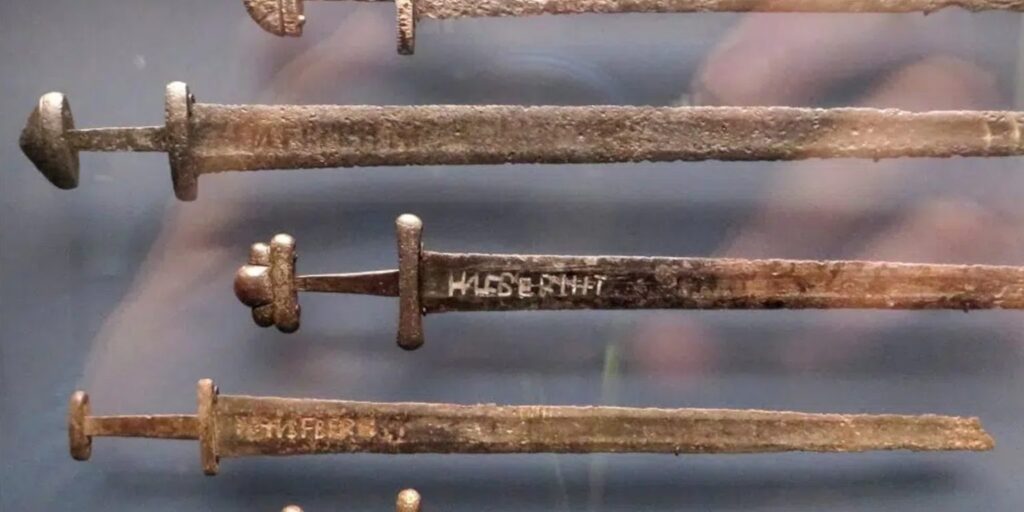
Over 170 Ulfberht swords have been discovered across Europe, dating from approximately AD 800 to 1050. Metallurgical analysis reveals that genuine examples were forged from high-carbon crucible steel requiring temperatures around 1,650°C, technology that wouldn’t reappear in Europe until the Industrial Revolution. The steel was possibly wootz, the legendary steel from India, imported via the Volga trade routes from Central Asia or India.
More than 20% of discovered Ulfberht swords are counterfeits: low-carbon iron filled with slag impurities, often bearing misspelt inscriptions such as +VLFBERHT+T. These would have catastrophically failed under combat stress.
By the early 11th century, genuine high-carbon Ulfberht blades had disappeared entirely from the archaeological record. The technology and trade networks that produced them were lost, and European metallurgy regressed to softer, inferior steel for centuries.
While the identity of the original Ulfberht smiths and the precise reason for the knowledge’s disappearance remain unknown, several theories prevail. Some suggest that the collapse of key trade routes could have severely disrupted the supply of crucial materials, such as wootz steel, from India. Others point to wars that might have disrupted the regions producing master forgers, or the possibility that secrecy among the smiths prevented the transmission of vital techniques. It’s a mystery worth solving.
Learn More About Fakes on Substack
The story of these fake swords is real. But the Vikings were not the only people to indulge in producing fakes. Check out our Substack post on different items from the past that were faked.